
The Ashford Boiler Company Approach to Boiler Repair and Replacement
When a boiler starts playing up, most homeowners want a clear answer to one question: should it be repaired or replaced? The difficulty is that the right decision depends on the age of the boiler, the fault, the repair history, parts availability, safety and how well the system still meets the home’s needs.

Why you can trust our content
We understand that the boiler industry can be confusing, with plenty of outdated or misleading information. That’s why we rely only on trusted, proven sources to guide our advice and installations:
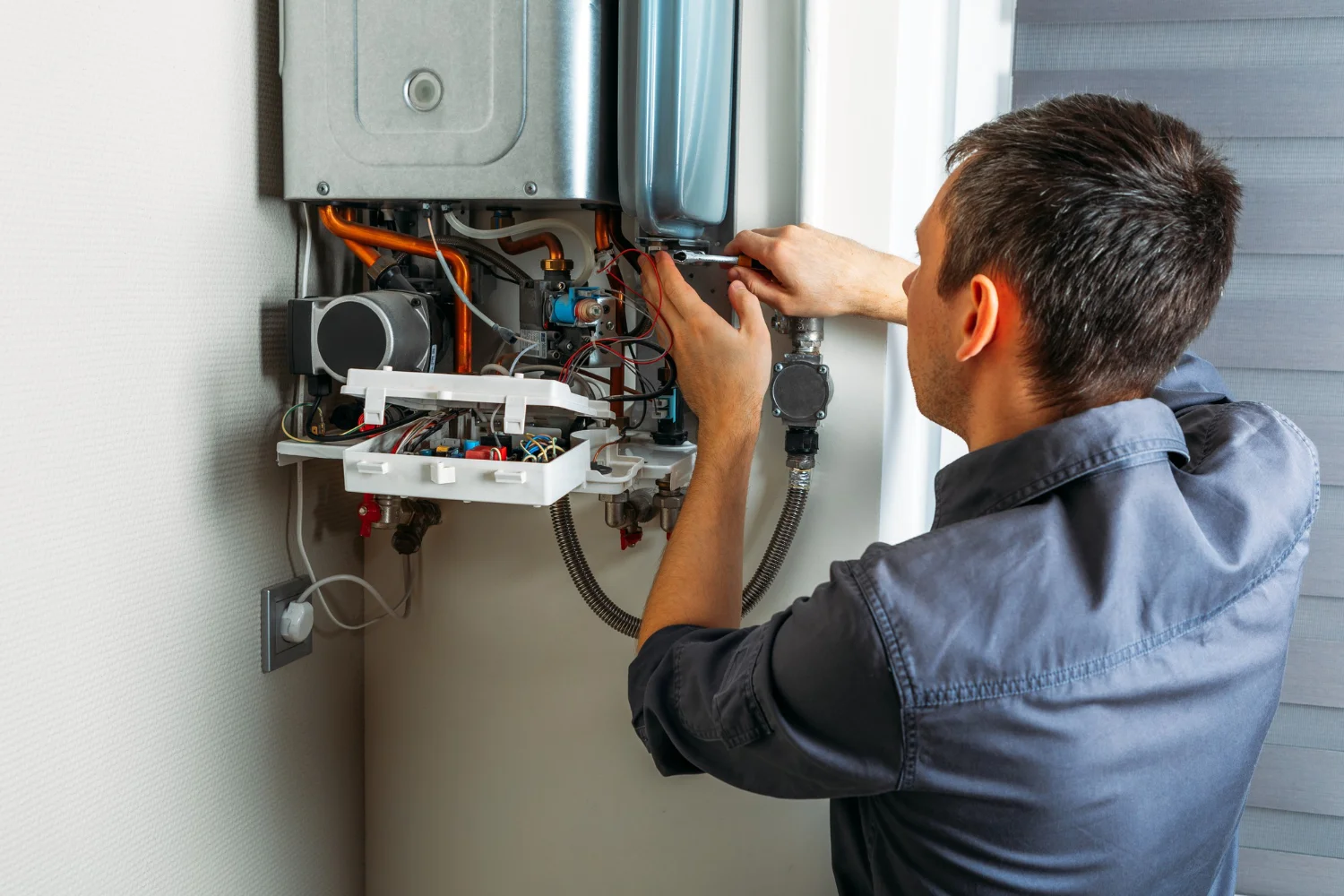
The Ashford Boiler Company’s approach is built around giving homeowners clear, practical advice before any decision is made. Sometimes a repair is the sensible route. Other times, replacement offers better long-term value, especially if the boiler is old, unreliable or becoming expensive to maintain.
This guide explains how a professional heating team should assess boiler problems, what affects repair pricing and when it may be time to stop repairing and start planning a replacement.
What happens when you report a boiler fault?
A good boiler repair process starts with understanding the symptoms. Not every fault needs the same response, and some issues can point to several possible causes.
When you contact a heating engineer, it helps to explain:
- What the boiler is doing or not doing
- Whether you have heating, hot water or neither
- Whether any fault code is showing
- Whether the pressure has dropped
- When the issue started
- Whether the boiler has made unusual noises
- Whether the fault is intermittent or constant
- Whether the boiler has been serviced recently
- Whether there are visible leaks or signs of corrosion
These details help the engineer decide how urgent the issue is and what checks may be needed during the visit.
For homeowners looking for boiler repair Ashford, a clear description of the fault can make the process quicker and more efficient.
How should a boiler fault be diagnosed?
A proper diagnosis should go beyond resetting the boiler and hoping the fault disappears. A qualified engineer should investigate the likely cause and consider whether the problem is linked to the boiler itself or the wider heating system.
Depending on the issue, diagnosis may include checking:
|
Area checked |
Why it matters |
|
Boiler pressure |
Low or rising pressure can indicate leaks, vessel issues or filling loop problems |
|
Fault codes |
Helps identify the area of concern |
|
Ignition sequence |
Shows whether the boiler is lighting correctly |
|
Pump operation |
Affects circulation around the heating system |
|
Diverter valve |
Can affect heating and hot water switching |
|
Expansion vessel |
Helps manage pressure changes |
|
Heat exchanger |
Can become blocked or scaled |
|
Condensate pipe |
Can block or freeze in colder weather |
|
Controls and thermostat |
Faults can mimic boiler problems |
|
Radiators and pipework |
Poor circulation may point to system issues |
A careful diagnosis helps avoid unnecessary part changes and repeat callouts.
Which fuel powers your boiler?
It just takes 2 minutes
And then you can book a free consultation
Is every boiler problem worth repairing?
No. Many faults are repairable, but that does not mean repairing is always the best financial decision. The right answer depends on whether the boiler is likely to remain reliable after the repair.
A repair may be sensible when:
- The boiler is relatively modern
- The fault is minor
- The boiler is still under warranty
- Parts are readily available
- The system has been serviced regularly
- The repair is affordable
- There are no wider performance concerns
Replacement may be more sensible when:
- The boiler is over 10 to 15 years old
- Faults are becoming frequent
- Repair parts are expensive
- The boiler is out of warranty
- Hot water performance is poor
- Energy use has increased
- The system is no longer suitable for the household
- The engineer identifies serious wear or safety concerns
The Ashford Boiler Company’s role is to help homeowners understand both options clearly rather than pushing one answer too quickly.
What affects boiler repair cost?
Boiler repair cost can vary depending on the type of fault, the parts required, labour time and whether the issue is straightforward or difficult to diagnose.
Common cost factors include:
- Type of boiler
- Boiler age
- Fault complexity
- Part availability
- Labour time
- Whether multiple faults are present
- Access around the boiler
- Whether the fault is linked to the wider system
- Whether the repair is urgent
- Whether the boiler has been maintained
For example, replacing a small sensor is very different from dealing with a failing heat exchanger, fan, pump or printed circuit board. Some parts are also more expensive than others, especially on older boilers where availability may be limited.
Why does repair history matter?
Repair history tells you whether the boiler has had one isolated problem or whether it is becoming unreliable. A boiler that has needed several callouts in a short period may be reaching the point where replacement should be considered.
You should look at:
- How many repairs have been needed recently
- Whether the same fault keeps returning
- Whether different components are failing
- How much has already been spent
- Whether the boiler is still under warranty
- Whether engineers have warned about future issues
A single repair may be worthwhile. Repeated repair bills can become frustrating and may cost more than planned replacement over time.
When is a boiler repair urgent?
Some boiler faults can wait for a scheduled appointment, while others need faster attention. Urgency depends on safety, household need and whether the boiler has completely stopped working.
A repair may be urgent if:
- You have no heating or hot water
- There is a suspected gas issue
- You can smell gas
- There are signs of carbon monoxide risk
- The boiler is leaking heavily
- Electrical components are affected by water
- Vulnerable people live in the property
- The issue happens during cold weather
If you smell gas, you should not wait for a normal repair visit. Turn off the gas at the meter if safe to do so, avoid using electrical switches, open windows and contact the National Gas Emergency Service immediately.
For non-gas emergency breakdowns, a local engineer can advise whether a same-day or priority visit is needed.
What affects emergency boiler repair cost?
Emergency boiler repair cost is usually affected by timing, urgency and the nature of the fault. Out-of-hours visits, weekend callouts or urgent attendance can cost more than standard appointments.
Factors may include:
- Time of day
- Weekend or bank holiday attendance
- Whether the boiler has fully stopped working
- Fault complexity
- Parts required
- Whether parts are immediately available
- Whether temporary measures are needed
- Location and travel time
- Labour required to make the system safe
A good company should explain callout charges and likely next steps clearly before attending where possible. If a full repair cannot be completed immediately because a part is needed, the engineer should explain what has been found and what happens next.
How does The Ashford Boiler Company decide between repair and replacement?
A balanced approach should consider safety first, then reliability, cost and suitability. The aim is not to replace boilers unnecessarily, but also not to keep repairing a system that is clearly becoming poor value.
The decision may include:
- Inspecting the current fault
- Checking boiler age
- Reviewing previous repair history
- Considering part availability
- Assessing efficiency
- Checking hot water and heating performance
- Looking at the wider heating system
- Discussing household needs
- Explaining repair cost versus replacement cost
- Giving clear options without pressure
This gives homeowners the information they need to choose confidently.
Could the wider heating system be causing the issue?
Yes. Boiler faults are sometimes linked to the wider heating system rather than the boiler alone. If the cause is not dealt with, the same problem may return even after a repair.
Wider system issues can include:
- Sludge in radiators
- Poor circulation
- Leaks in pipework
- Faulty thermostats
- Air in the system
- Incorrect system pressure
- Poor water quality
- Radiators that need balancing
- Old or unsuitable controls
A professional approach to boiler repair Ashford should include checking whether the visible fault is the symptom or the root cause.
Example scenario: repair first, then plan replacement
An Ashford homeowner has a 14-year-old boiler that stops providing hot water. The engineer diagnoses a faulty component and explains that repair is possible. However, they also note that the boiler has had two previous callouts, is out of warranty and is showing signs of general wear.
In this case, the homeowner may decide to repair the boiler as a short-term fix but start planning for replacement before winter. That can be a sensible middle ground. It avoids an immediate emergency replacement while giving the homeowner time to compare options properly.
How can homeowners reduce future repair risks?
No boiler can be guaranteed never to fail, but maintenance helps reduce risk. Annual servicing, system protection and early attention to warning signs can all help.
Useful habits include:
- Book an annual boiler service
- Keep an eye on boiler pressure
- Do not ignore leaks or unusual noises
- Bleed radiators where appropriate
- Use heating controls properly
- Keep external condensate pipes protected in cold weather
- Ask about system cleaning if radiators heat unevenly
- Make sure the boiler warranty is maintained
- Act early if hot water performance changes
Small issues are often easier to deal with before they become major breakdowns.
Boiler faults can be stressful, but the decision does not need to be confusing. A clear diagnosis, honest explanation and practical comparison between repair and replacement can help you choose the right next step.
The Ashford Boiler Company can assess your boiler, explain the fault and advise whether repair or replacement is the most sensible route. If you need boiler repair Ashford or want advice on replacement options, contact our team for straightforward support.
Related articles
Which fuel powers your boiler?
At a glance
The Ashford Boiler Company’s approach is built around giving homeowners clear, practical advice before any decision is made. Sometimes a repair is the sensible route. Other times, replacement offers better long-term value, especially if the boiler is old, unreliable or becoming expensive to maintain.
This guide explains how a professional heating team should assess boiler problems, what affects repair pricing and when it may be time to stop repairing and start planning a replacement.
What happens when you report a boiler fault?
A good boiler repair process starts with understanding the symptoms. Not every fault needs the same response, and some issues can point to several possible causes.
When you contact a heating engineer, it helps to explain:
- What the boiler is doing or not doing
- Whether you have heating, hot water or neither
- Whether any fault code is showing
- Whether the pressure has dropped
- When the issue started
- Whether the boiler has made unusual noises
- Whether the fault is intermittent or constant
- Whether the boiler has been serviced recently
- Whether there are visible leaks or signs of corrosion
These details help the engineer decide how urgent the issue is and what checks may be needed during the visit.
For homeowners looking for boiler repair Ashford, a clear description of the fault can make the process quicker and more efficient.
How should a boiler fault be diagnosed?
A proper diagnosis should go beyond resetting the boiler and hoping the fault disappears. A qualified engineer should investigate the likely cause and consider whether the problem is linked to the boiler itself or the wider heating system.
Depending on the issue, diagnosis may include checking:
|
Area checked |
Why it matters |
|
Boiler pressure |
Low or rising pressure can indicate leaks, vessel issues or filling loop problems |
|
Fault codes |
Helps identify the area of concern |
|
Ignition sequence |
Shows whether the boiler is lighting correctly |
|
Pump operation |
Affects circulation around the heating system |
|
Diverter valve |
Can affect heating and hot water switching |
|
Expansion vessel |
Helps manage pressure changes |
|
Heat exchanger |
Can become blocked or scaled |
|
Condensate pipe |
Can block or freeze in colder weather |
|
Controls and thermostat |
Faults can mimic boiler problems |
|
Radiators and pipework |
Poor circulation may point to system issues |
A careful diagnosis helps avoid unnecessary part changes and repeat callouts.
Which fuel powers your boiler?
It just takes 2 minutes
And then you can book a free consultation
Is every boiler problem worth repairing?
No. Many faults are repairable, but that does not mean repairing is always the best financial decision. The right answer depends on whether the boiler is likely to remain reliable after the repair.
A repair may be sensible when:
- The boiler is relatively modern
- The fault is minor
- The boiler is still under warranty
- Parts are readily available
- The system has been serviced regularly
- The repair is affordable
- There are no wider performance concerns
Replacement may be more sensible when:
- The boiler is over 10 to 15 years old
- Faults are becoming frequent
- Repair parts are expensive
- The boiler is out of warranty
- Hot water performance is poor
- Energy use has increased
- The system is no longer suitable for the household
- The engineer identifies serious wear or safety concerns
The Ashford Boiler Company’s role is to help homeowners understand both options clearly rather than pushing one answer too quickly.
What affects boiler repair cost?
Boiler repair cost can vary depending on the type of fault, the parts required, labour time and whether the issue is straightforward or difficult to diagnose.
Common cost factors include:
- Type of boiler
- Boiler age
- Fault complexity
- Part availability
- Labour time
- Whether multiple faults are present
- Access around the boiler
- Whether the fault is linked to the wider system
- Whether the repair is urgent
- Whether the boiler has been maintained
For example, replacing a small sensor is very different from dealing with a failing heat exchanger, fan, pump or printed circuit board. Some parts are also more expensive than others, especially on older boilers where availability may be limited.
Why does repair history matter?
Repair history tells you whether the boiler has had one isolated problem or whether it is becoming unreliable. A boiler that has needed several callouts in a short period may be reaching the point where replacement should be considered.
You should look at:
- How many repairs have been needed recently
- Whether the same fault keeps returning
- Whether different components are failing
- How much has already been spent
- Whether the boiler is still under warranty
- Whether engineers have warned about future issues
A single repair may be worthwhile. Repeated repair bills can become frustrating and may cost more than planned replacement over time.
When is a boiler repair urgent?
Some boiler faults can wait for a scheduled appointment, while others need faster attention. Urgency depends on safety, household need and whether the boiler has completely stopped working.
A repair may be urgent if:
- You have no heating or hot water
- There is a suspected gas issue
- You can smell gas
- There are signs of carbon monoxide risk
- The boiler is leaking heavily
- Electrical components are affected by water
- Vulnerable people live in the property
- The issue happens during cold weather
If you smell gas, you should not wait for a normal repair visit. Turn off the gas at the meter if safe to do so, avoid using electrical switches, open windows and contact the National Gas Emergency Service immediately.
For non-gas emergency breakdowns, a local engineer can advise whether a same-day or priority visit is needed.
What affects emergency boiler repair cost?
Emergency boiler repair cost is usually affected by timing, urgency and the nature of the fault. Out-of-hours visits, weekend callouts or urgent attendance can cost more than standard appointments.
Factors may include:
- Time of day
- Weekend or bank holiday attendance
- Whether the boiler has fully stopped working
- Fault complexity
- Parts required
- Whether parts are immediately available
- Whether temporary measures are needed
- Location and travel time
- Labour required to make the system safe
A good company should explain callout charges and likely next steps clearly before attending where possible. If a full repair cannot be completed immediately because a part is needed, the engineer should explain what has been found and what happens next.
How does The Ashford Boiler Company decide between repair and replacement?
A balanced approach should consider safety first, then reliability, cost and suitability. The aim is not to replace boilers unnecessarily, but also not to keep repairing a system that is clearly becoming poor value.
The decision may include:
- Inspecting the current fault
- Checking boiler age
- Reviewing previous repair history
- Considering part availability
- Assessing efficiency
- Checking hot water and heating performance
- Looking at the wider heating system
- Discussing household needs
- Explaining repair cost versus replacement cost
- Giving clear options without pressure
This gives homeowners the information they need to choose confidently.
Could the wider heating system be causing the issue?
Yes. Boiler faults are sometimes linked to the wider heating system rather than the boiler alone. If the cause is not dealt with, the same problem may return even after a repair.
Wider system issues can include:
- Sludge in radiators
- Poor circulation
- Leaks in pipework
- Faulty thermostats
- Air in the system
- Incorrect system pressure
- Poor water quality
- Radiators that need balancing
- Old or unsuitable controls
A professional approach to boiler repair Ashford should include checking whether the visible fault is the symptom or the root cause.
Example scenario: repair first, then plan replacement
An Ashford homeowner has a 14-year-old boiler that stops providing hot water. The engineer diagnoses a faulty component and explains that repair is possible. However, they also note that the boiler has had two previous callouts, is out of warranty and is showing signs of general wear.
In this case, the homeowner may decide to repair the boiler as a short-term fix but start planning for replacement before winter. That can be a sensible middle ground. It avoids an immediate emergency replacement while giving the homeowner time to compare options properly.
How can homeowners reduce future repair risks?
No boiler can be guaranteed never to fail, but maintenance helps reduce risk. Annual servicing, system protection and early attention to warning signs can all help.
Useful habits include:
- Book an annual boiler service
- Keep an eye on boiler pressure
- Do not ignore leaks or unusual noises
- Bleed radiators where appropriate
- Use heating controls properly
- Keep external condensate pipes protected in cold weather
- Ask about system cleaning if radiators heat unevenly
- Make sure the boiler warranty is maintained
- Act early if hot water performance changes
Small issues are often easier to deal with before they become major breakdowns.
Boiler faults can be stressful, but the decision does not need to be confusing. A clear diagnosis, honest explanation and practical comparison between repair and replacement can help you choose the right next step.
The Ashford Boiler Company can assess your boiler, explain the fault and advise whether repair or replacement is the most sensible route. If you need boiler repair Ashford or want advice on replacement options, contact our team for straightforward support.