
New Boiler Cost in Ashford: How Property Type Changes the Price
The price of a new boiler is not decided by the boiler alone. Two homes can choose a similar model and still receive different quotes because the installation work, property layout, pipework, hot water demand and heating system condition are not the same.

Why you can trust our content
We understand that the boiler industry can be confusing, with plenty of outdated or misleading information. That’s why we rely only on trusted, proven sources to guide our advice and installations:

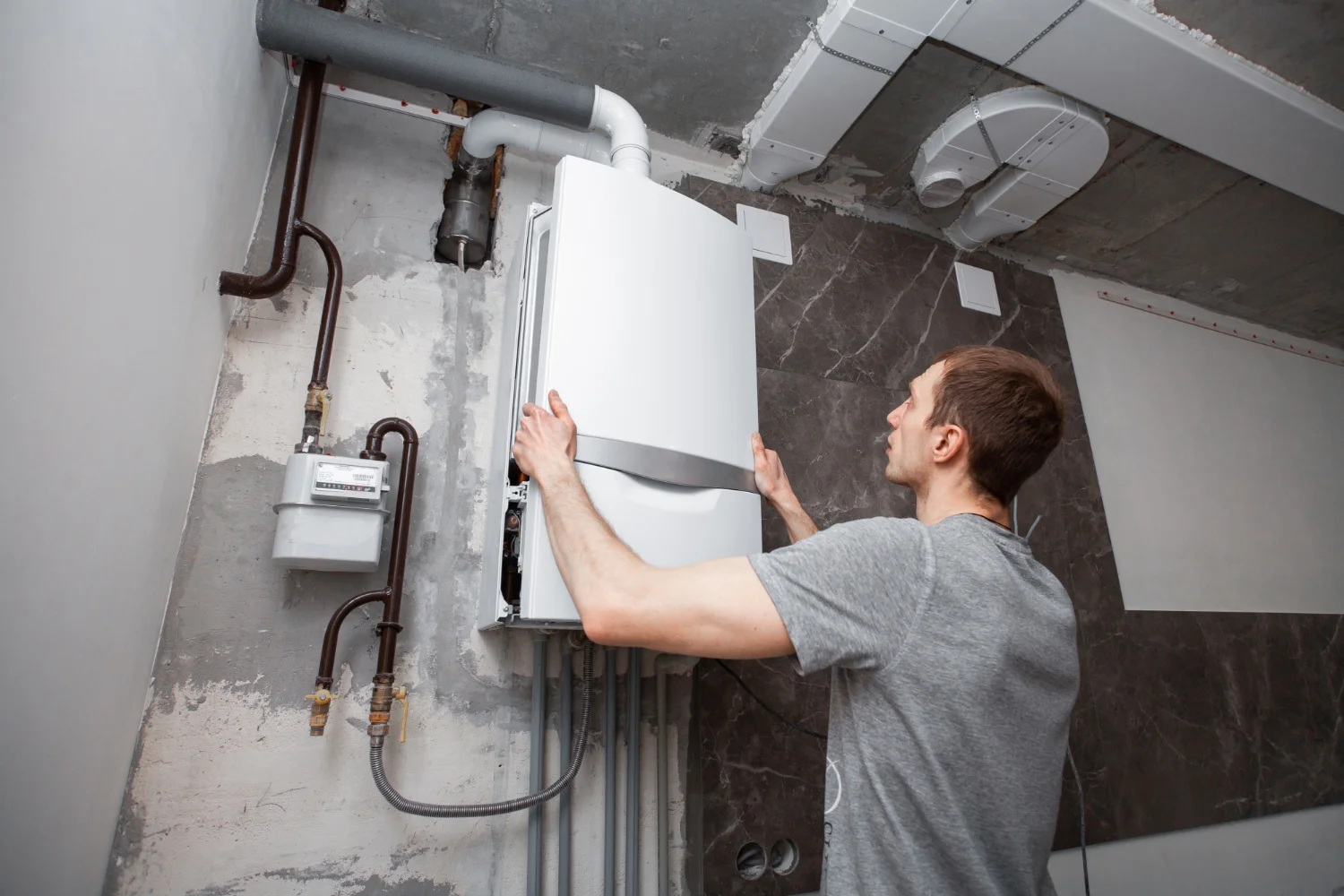
For homeowners comparing new boiler cost Ashford, property type is one of the most important factors to understand. A compact flat, a terraced house, a semi-detached family home and a larger detached property can all have different requirements, even before boiler brand and warranty are considered.
This guide explains how different property types affect the final price, what installers usually need to assess and why the cheapest quote is not always the best long-term value.
Why does property type affect boiler price?
Property type affects the amount of work required before, during and after installation. A straightforward replacement in an accessible location will usually be simpler than a boiler move, system conversion or installation in an older property with awkward pipework.
The cost for new boiler installation may be influenced by:
- Size of the property
- Number of radiators
- Number of bathrooms
- Hot water demand
- Boiler location
- Flue route
- Existing pipework
- Gas supply pipe size
- System water quality
- Access for engineers
- Whether controls need upgrading
- Whether the boiler type is changing
This is why an accurate quote should be based on your home, not just a boiler model.
How does a flat affect new boiler cost?
Flats can sometimes be simpler because they often have fewer radiators, less floor area and lower hot water demand. However, this is not always the case. Boiler location, flue access and building layout can make a significant difference.
In a flat, the installer may need to check:
- Whether the flue can terminate safely
- Access to external walls
- Existing boiler position
- Building restrictions
- Pipework routes
- Water pressure
- Whether the property has one bathroom or more
- Space around the boiler for servicing
A like-for-like combi boiler replacement in a flat may be relatively straightforward if the boiler position and flue route are already suitable. However, if the flue route is awkward or the boiler needs moving, the cost can increase.
Which fuel powers your boiler?
It just takes 2 minutes
And then you can book a free consultation
Are terraced houses usually straightforward?
Terraced houses often suit combi boilers well, especially where there is one main bathroom and moderate hot water usage. However, the age and layout of the property can affect the installation.
Older terraced homes may have pipework that has been altered over time. Radiators may have been added gradually, and controls may be outdated. If the boiler is located in a kitchen cupboard, airing cupboard or upstairs room, access and flue requirements will need to be checked carefully.
|
Property type |
Common cost factors |
What to check before quoting |
|
Flat |
Flue access, space, water pressure |
Boiler location and building restrictions |
|
Terraced house |
Pipework age, radiator layout, access |
Heating demand and flue route |
|
Semi-detached house |
Hot water demand, number of radiators |
Boiler size and system condition |
|
Detached house |
Larger heating load, multiple bathrooms |
Whether combi or system boiler is best |
|
Older property |
Pipework, sludge, controls, insulation |
Full system assessment before installation |
A terraced property may not need the largest boiler, but it still needs a properly matched system.
What changes in semi-detached homes?
Semi-detached homes often have more heating demand than smaller properties. They may have more radiators, larger living areas, extensions, conservatories or additional bathrooms.
This can affect new boiler cost Ashford because the installer must consider whether the current boiler is still suitable for the full property. If the home has grown over time, a simple like-for-like replacement may not be the best answer.
For example, a semi-detached home with a rear extension may need better heating output than it did when the original boiler was fitted. If the household has also added an en-suite or a high-flow shower, hot water demand may have increased too.
A good installer should ask how the home is used now, not just what boiler is currently on the wall.
Do detached homes cost more to upgrade?
Detached homes can cost more to upgrade because they are often larger, have more radiators and may have more complex hot water requirements. This does not automatically mean the job will be expensive, but it does mean the installer needs to be careful with sizing and system design.
A detached home may need:
- A higher output boiler
- A system boiler rather than a combi
- Hot water cylinder upgrades
- More detailed pipework checks
- Better heating controls
- Radiator balancing
- System cleaning
- Zoned heating controls
If several bathrooms are used at the same time, a combi boiler may not always be the best choice. A system boiler with a suitable cylinder may provide stronger hot water performance for larger households.
How do older Ashford properties affect the price?
Older homes can be more complex because the heating system may have been changed several times over the years. Pipework may be older, radiator sizes may not match room requirements, and the existing boiler may not have been installed to modern expectations.
Possible issues include:
- Narrow or ageing pipework
- Sludge in radiators
- Outdated thermostats
- Poor system balance
- Limited boiler access
- Awkward flue routes
- Old hot water cylinders
- Poor insulation
- Previous DIY or low-quality alterations
These issues do not always mean major work is needed, but they should be checked before quoting. Installing a new boiler onto a poor system can reduce performance and increase the chance of future problems.
Does moving the boiler increase the cost?
Yes, moving a boiler usually increases the cost because it involves more labour, pipework and planning. The engineer may need to reroute gas, heating, hot water, condensate and flue connections.
Boiler moves are often requested when homeowners want to:
- Free up kitchen cupboard space
- Move the boiler to a utility room
- Relocate it from a bedroom
- Improve access for servicing
- Support a renovation
- Change the layout of the home
A boiler move can be worthwhile, but it should be priced clearly. The quote should explain what pipework, making good and access requirements are included.
How does boiler type affect the final quote?
The type of boiler being installed makes a big difference. A combi-to-combi replacement is usually simpler than converting from a regular boiler with tanks and a cylinder to a combi system.
Common installation types include:
- Combi to combi replacement
- Regular boiler to combi conversion
- System boiler replacement
- Regular boiler replacement
- System boiler to combi conversion
- Boiler relocation
- Full heating system upgrade
The more the system changes, the more work is usually involved. This is why the cost for new boiler installation should always be judged against the full scope of work.
What extras can change the price?
Some “extras” are not really luxuries. They can be important parts of a reliable installation.
These may include:
- Magnetic filter
- Chemical system clean
- Power flush if required
- Smart thermostat
- Thermostatic radiator valves
- Condensate pipe upgrades
- Flue extensions
- Pipework alterations
- System inhibitor
- Radiator balancing
- Warranty registration
A cheaper quote may exclude some of these items. That can make the headline price look attractive, but the long-term value may be weaker if the system is not properly protected.
Should homeowners choose the cheapest quote?
The cheapest quote is not always the best choice. It may be suitable if the scope is clear and the installer has included everything required. However, a very low quote should be checked carefully.
Ask:
- Is the boiler model clearly listed?
- Is the warranty included?
- Are controls included?
- Is the system being cleaned or protected?
- Is the old boiler being removed?
- Is all pipework included?
- Is VAT included where applicable?
- Is the installer Gas Safe registered?
- Will the boiler be commissioned correctly?
- What aftercare is available?
A transparent quote gives you confidence. A vague quote can lead to unexpected costs later.
Example scenario: two Ashford homes, two different prices
One Ashford homeowner may live in a small two-bedroom flat with an existing combi boiler in the kitchen. The flue route is suitable, the pipework is in good condition and the boiler is being replaced in the same position. This may be a relatively straightforward job.
Another homeowner may live in a larger detached property with several bathrooms, an older heating system and a boiler that needs moving from an airing cupboard to a utility room. That job is likely to involve more labour, more materials and more planning.
Both homeowners may ask for a new boiler, but the work required is completely different. This is why property type has such a strong influence on price.
How can you get a more accurate quote?
To get a more accurate quote, provide as much information as possible. Useful details include:
- Property type
- Number of bedrooms
- Number of bathrooms
- Number of radiators
- Current boiler make and model
- Boiler location
- Whether you want the boiler moved
- Any hot water issues
- Any heating issues
- Photos of the boiler, flue and pipework
- Any future renovation plans
The Ashford Boiler Company can then assess the details and advise what type of installation is most suitable.
New boiler pricing is not just about choosing a boiler from a price list. Your property type, heating system, hot water demand and installation requirements all shape the final quote.
The Ashford Boiler Company can assess your home properly and explain what affects your quote in plain English. Whether you live in a flat, terraced house, semi-detached home or larger property, our team can help you choose a suitable boiler and a clear installation plan.
Related articles




Which fuel powers your boiler?
Key Factors Affecting New Boiler Installation Costs
For homeowners comparing new boiler cost Ashford, property type is one of the most important factors to understand. A compact flat, a terraced house, a semi-detached family home and a larger detached property can all have different requirements, even before boiler brand and warranty are considered.
This guide explains how different property types affect the final price, what installers usually need to assess and why the cheapest quote is not always the best long-term value.
Why does property type affect boiler price?
Property type affects the amount of work required before, during and after installation. A straightforward replacement in an accessible location will usually be simpler than a boiler move, system conversion or installation in an older property with awkward pipework.
The cost for new boiler installation may be influenced by:
- Size of the property
- Number of radiators
- Number of bathrooms
- Hot water demand
- Boiler location
- Flue route
- Existing pipework
- Gas supply pipe size
- System water quality
- Access for engineers
- Whether controls need upgrading
- Whether the boiler type is changing
This is why an accurate quote should be based on your home, not just a boiler model.
How does a flat affect new boiler cost?
Flats can sometimes be simpler because they often have fewer radiators, less floor area and lower hot water demand. However, this is not always the case. Boiler location, flue access and building layout can make a significant difference.
In a flat, the installer may need to check:
- Whether the flue can terminate safely
- Access to external walls
- Existing boiler position
- Building restrictions
- Pipework routes
- Water pressure
- Whether the property has one bathroom or more
- Space around the boiler for servicing
A like-for-like combi boiler replacement in a flat may be relatively straightforward if the boiler position and flue route are already suitable. However, if the flue route is awkward or the boiler needs moving, the cost can increase.
Which fuel powers your boiler?
It just takes 2 minutes
And then you can book a free consultation
Are terraced houses usually straightforward?
Terraced houses often suit combi boilers well, especially where there is one main bathroom and moderate hot water usage. However, the age and layout of the property can affect the installation.
Older terraced homes may have pipework that has been altered over time. Radiators may have been added gradually, and controls may be outdated. If the boiler is located in a kitchen cupboard, airing cupboard or upstairs room, access and flue requirements will need to be checked carefully.
|
Property type |
Common cost factors |
What to check before quoting |
|
Flat |
Flue access, space, water pressure |
Boiler location and building restrictions |
|
Terraced house |
Pipework age, radiator layout, access |
Heating demand and flue route |
|
Semi-detached house |
Hot water demand, number of radiators |
Boiler size and system condition |
|
Detached house |
Larger heating load, multiple bathrooms |
Whether combi or system boiler is best |
|
Older property |
Pipework, sludge, controls, insulation |
Full system assessment before installation |
A terraced property may not need the largest boiler, but it still needs a properly matched system.
What changes in semi-detached homes?
Semi-detached homes often have more heating demand than smaller properties. They may have more radiators, larger living areas, extensions, conservatories or additional bathrooms.
This can affect new boiler cost Ashford because the installer must consider whether the current boiler is still suitable for the full property. If the home has grown over time, a simple like-for-like replacement may not be the best answer.
For example, a semi-detached home with a rear extension may need better heating output than it did when the original boiler was fitted. If the household has also added an en-suite or a high-flow shower, hot water demand may have increased too.
A good installer should ask how the home is used now, not just what boiler is currently on the wall.
Do detached homes cost more to upgrade?
Detached homes can cost more to upgrade because they are often larger, have more radiators and may have more complex hot water requirements. This does not automatically mean the job will be expensive, but it does mean the installer needs to be careful with sizing and system design.
A detached home may need:
- A higher output boiler
- A system boiler rather than a combi
- Hot water cylinder upgrades
- More detailed pipework checks
- Better heating controls
- Radiator balancing
- System cleaning
- Zoned heating controls
If several bathrooms are used at the same time, a combi boiler may not always be the best choice. A system boiler with a suitable cylinder may provide stronger hot water performance for larger households.
How do older Ashford properties affect the price?
Older homes can be more complex because the heating system may have been changed several times over the years. Pipework may be older, radiator sizes may not match room requirements, and the existing boiler may not have been installed to modern expectations.
Possible issues include:
- Narrow or ageing pipework
- Sludge in radiators
- Outdated thermostats
- Poor system balance
- Limited boiler access
- Awkward flue routes
- Old hot water cylinders
- Poor insulation
- Previous DIY or low-quality alterations
These issues do not always mean major work is needed, but they should be checked before quoting. Installing a new boiler onto a poor system can reduce performance and increase the chance of future problems.
Does moving the boiler increase the cost?
Yes, moving a boiler usually increases the cost because it involves more labour, pipework and planning. The engineer may need to reroute gas, heating, hot water, condensate and flue connections.
Boiler moves are often requested when homeowners want to:
- Free up kitchen cupboard space
- Move the boiler to a utility room
- Relocate it from a bedroom
- Improve access for servicing
- Support a renovation
- Change the layout of the home
A boiler move can be worthwhile, but it should be priced clearly. The quote should explain what pipework, making good and access requirements are included.
How does boiler type affect the final quote?
The type of boiler being installed makes a big difference. A combi-to-combi replacement is usually simpler than converting from a regular boiler with tanks and a cylinder to a combi system.
Common installation types include:
- Combi to combi replacement
- Regular boiler to combi conversion
- System boiler replacement
- Regular boiler replacement
- System boiler to combi conversion
- Boiler relocation
- Full heating system upgrade
The more the system changes, the more work is usually involved. This is why the cost for new boiler installation should always be judged against the full scope of work.
What extras can change the price?
Some “extras” are not really luxuries. They can be important parts of a reliable installation.
These may include:
- Magnetic filter
- Chemical system clean
- Power flush if required
- Smart thermostat
- Thermostatic radiator valves
- Condensate pipe upgrades
- Flue extensions
- Pipework alterations
- System inhibitor
- Radiator balancing
- Warranty registration
A cheaper quote may exclude some of these items. That can make the headline price look attractive, but the long-term value may be weaker if the system is not properly protected.
Should homeowners choose the cheapest quote?
The cheapest quote is not always the best choice. It may be suitable if the scope is clear and the installer has included everything required. However, a very low quote should be checked carefully.
Ask:
- Is the boiler model clearly listed?
- Is the warranty included?
- Are controls included?
- Is the system being cleaned or protected?
- Is the old boiler being removed?
- Is all pipework included?
- Is VAT included where applicable?
- Is the installer Gas Safe registered?
- Will the boiler be commissioned correctly?
- What aftercare is available?
A transparent quote gives you confidence. A vague quote can lead to unexpected costs later.
Example scenario: two Ashford homes, two different prices
One Ashford homeowner may live in a small two-bedroom flat with an existing combi boiler in the kitchen. The flue route is suitable, the pipework is in good condition and the boiler is being replaced in the same position. This may be a relatively straightforward job.
Another homeowner may live in a larger detached property with several bathrooms, an older heating system and a boiler that needs moving from an airing cupboard to a utility room. That job is likely to involve more labour, more materials and more planning.
Both homeowners may ask for a new boiler, but the work required is completely different. This is why property type has such a strong influence on price.
How can you get a more accurate quote?
To get a more accurate quote, provide as much information as possible. Useful details include:
- Property type
- Number of bedrooms
- Number of bathrooms
- Number of radiators
- Current boiler make and model
- Boiler location
- Whether you want the boiler moved
- Any hot water issues
- Any heating issues
- Photos of the boiler, flue and pipework
- Any future renovation plans
The Ashford Boiler Company can then assess the details and advise what type of installation is most suitable.
New boiler pricing is not just about choosing a boiler from a price list. Your property type, heating system, hot water demand and installation requirements all shape the final quote.
The Ashford Boiler Company can assess your home properly and explain what affects your quote in plain English. Whether you live in a flat, terraced house, semi-detached home or larger property, our team can help you choose a suitable boiler and a clear installation plan.