
New Combi Boiler in Ashford: Matching Your Hot Water and Heating Needs
A combi boiler can be a practical choice for many homes, especially where space is limited and hot water is needed on demand. Unlike a system or regular boiler, a combi boiler does not usually need a separate hot water cylinder, which can make it a neat and efficient option for the right property.

Why you can trust our content
We understand that the boiler industry can be confusing, with plenty of outdated or misleading information. That’s why we rely only on trusted, proven sources to guide our advice and installations:
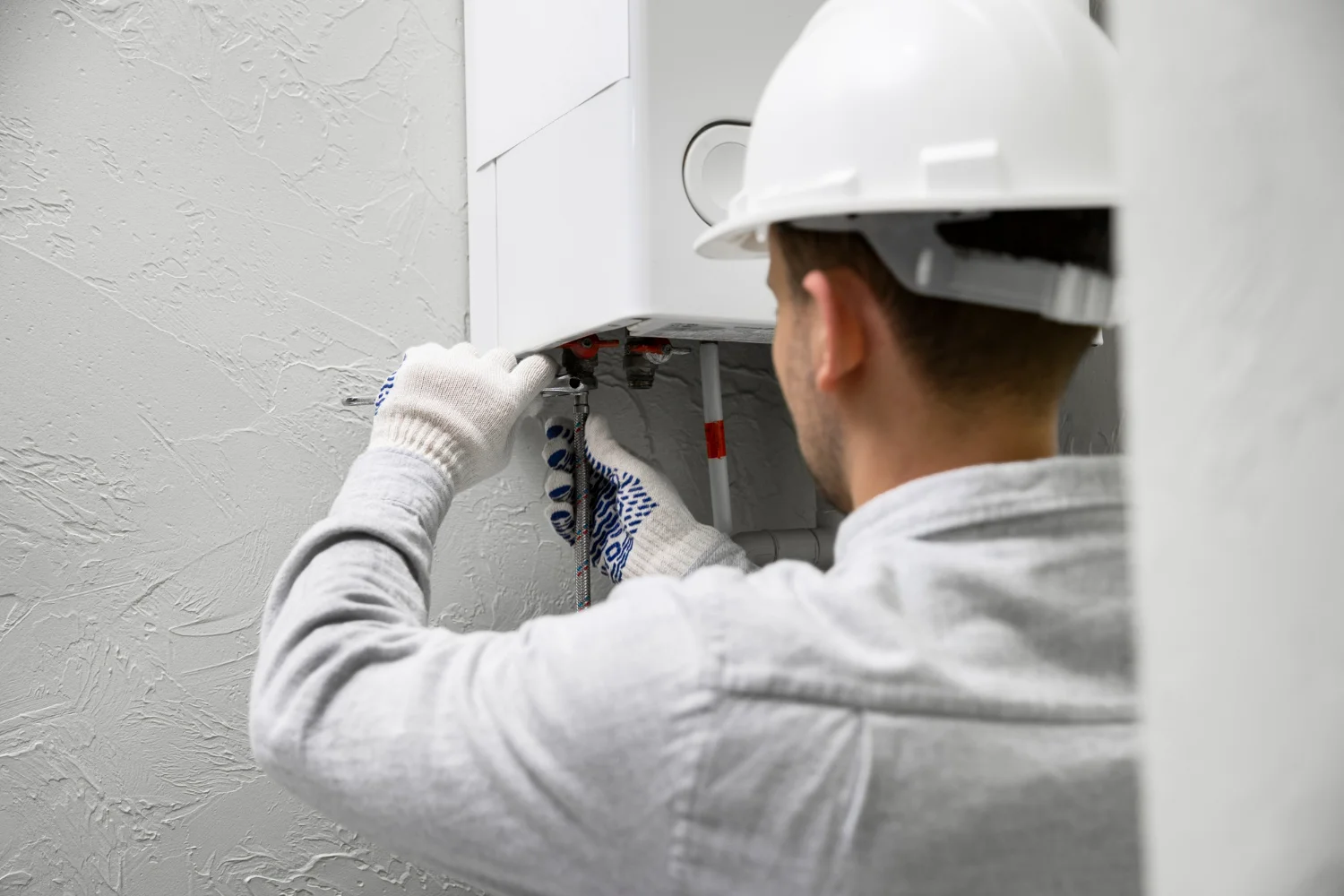
However, choosing a new combi boiler Ashford homeowners can rely on is not just about picking a popular brand or the cheapest quote. The boiler needs to match your home’s hot water demand, heating requirements, water pressure, number of bathrooms and daily routine.
This guide explains what to consider before choosing a combi boiler, how to avoid common sizing mistakes and when a different boiler type may be more suitable.
What is a combi boiler?
A combi boiler, short for combination boiler, provides heating and hot water from one compact unit. It heats water directly from the mains when you turn on a hot tap or shower, rather than storing hot water in a cylinder.
This can make combi boilers especially suitable for smaller and medium-sized homes where hot water demand is fairly straightforward.
Common benefits include:
- No separate hot water cylinder required
- Compact design
- Hot water on demand
- Good energy efficiency when installed correctly
- Less space taken up in airing cupboards or lofts
- Simple controls for many households
A combi boiler can be a strong option, but it still needs to be specified properly. If the boiler is too small for the household, you may struggle with hot water performance. If it is oversized for heating, it may not run as efficiently as expected.
Is a combi boiler right for every Ashford home?
No. A combi boiler is suitable for many homes, but not all. The right choice depends on how much hot water your household uses at the same time.
A combi boiler may be suitable if:
- You have one bathroom or a main bathroom plus occasional en-suite use
- You want to remove an old hot water cylinder
- Space is limited
- You prefer hot water on demand
- Your mains water pressure and flow rate are strong enough
- Your household rarely uses multiple showers or baths at once
A combi boiler may be less suitable if:
- You have several bathrooms used at the same time
- Your mains water flow is weak
- You have high simultaneous hot water demand
- You prefer stored hot water
- You have a larger home with complex heating requirements
Before arranging combi boiler installation Ashford, it is important to have your home and usage properly assessed rather than assuming a combi is automatically the best option.
Which fuel powers your boiler?
It just takes 2 minutes
And then you can book a free consultation
How does hot water demand affect boiler choice?
Hot water demand is one of the biggest factors when choosing a combi boiler. Because a combi heats water directly from the mains, its performance depends heavily on the boiler’s hot water output and the incoming water supply.
For example, a household with one shower, one bath and two occupants may have very different needs from a family of five with two bathrooms and busy morning routines.
|
Household situation |
What to consider |
|
One bathroom, low usage |
A combi boiler may be a practical fit |
|
One bathroom plus en-suite |
Flow rate and usage habits matter |
|
Two showers used at once |
A combi may struggle unless carefully specified |
|
Large family home |
A system boiler may be worth considering |
|
Weak mains pressure |
Hot water performance may be limited |
|
Limited storage space |
A combi may be attractive if demand is suitable |
A good installer will ask how your household actually uses hot water, not just count the number of rooms in the property.
What size combi boiler do you need?
Combi boiler sizing involves two main considerations: heating output and hot water output.
Heating output relates to how much power is needed to heat your home and radiators. Hot water output relates to how well the boiler can provide hot water through taps, showers and baths.
Many homeowners focus only on boiler size in kilowatts, but bigger is not always better. An oversized boiler may not run efficiently, while an undersized boiler may struggle to keep up with demand.
A professional assessment should consider:
- Number of radiators
- Property size
- Insulation levels
- Number of bathrooms
- Shower type
- Mains water flow rate
- Number of occupants
- Usage patterns
- Existing pipework
- Heating controls
If you are planning a new combi boiler Ashford, the goal should be to choose the right boiler for your home, not simply the largest model available.
Why does water pressure matter?
Water pressure and flow rate are essential when choosing a combi boiler. Even a powerful combi boiler can only work with the water supply entering the property.
If your mains water flow is poor, a combi may not deliver the shower performance you expect. This is why a professional installer should check flow rate before recommending a boiler.
Signs that water supply may need checking include:
- Showers feel weak
- Hot water slows when another tap is opened
- Bath filling takes a long time
- Water pressure varies at different times of day
- Existing combi struggles with consistent hot water
In some cases, the boiler is not the only issue. Pipework, incoming supply, shower valves or older plumbing can all affect performance.
Should you replace an old combi with another combi?
Replacing an old combi boiler with a newer combi can be straightforward, but it should not be treated as automatic. Your household needs may have changed since the original boiler was installed.
For example, you may have:
- Added an extra bathroom
- Converted a loft
- Built an extension
- Changed radiators
- Increased the number of occupants
- Added a higher-flow shower
- Started working from home more often
If any of these apply, your installer should reassess the system rather than simply matching the old boiler size. This helps ensure the new boiler suits your current and future needs.
What can affect the installation process?
The installation process depends on the condition and layout of your existing heating system. A straightforward combi swap may be completed more quickly than a full conversion from a regular boiler or system boiler.
Factors that can affect the job include:
- Current boiler location
- Whether the boiler is being moved
- Flue route
- Pipework upgrades
- Condensate pipe location
- System cleaning requirements
- Controls and thermostat upgrades
- Gas supply pipe size
- Access around the boiler
- Waste removal
A clear quote should explain what is included, what may be extra and how long the installation is expected to take.
Are modern combi boilers more efficient?
Modern combi boilers are generally designed to be efficient, especially when installed with suitable controls and set up correctly. However, efficiency depends on more than the boiler itself.
Your home’s insulation, radiator condition, heating controls and usage habits all play a role.
To help a combi boiler perform well, your installer may recommend:
- A magnetic filter
- System cleaning or flushing
- Smart or programmable controls
- Thermostatic radiator valves
- Correct flow temperature settings
- Annual servicing
- Proper commissioning after installation
A quality combi boiler installation Ashford should focus on the whole system, not just fitting the appliance to the wall.
Example scenario: a growing Ashford household
A couple in Ashford may have moved into a home with an older combi boiler. At first, it coped well. Over time, the household grows, an en-suite is added, and hot water demand increases.
The boiler still works, but the shower temperature fluctuates and the hot water struggles when two outlets are used close together. In this case, the issue may not be a simple fault. The household may now need a better specified boiler or, depending on the demand, a different system type.
A proper assessment would check flow rate, bathrooms, usage patterns, radiator requirements and installation options before recommending the best route.
What should you ask before choosing a combi boiler?
Before agreeing to an installation, ask clear questions so you understand the recommendation.
Useful questions include:
- Is a combi boiler suitable for my property?
- What hot water flow rate can I realistically expect?
- Will it cope with my household’s usage?
- What boiler size are you recommending and why?
- Does my water pressure need checking?
- Are my radiators and pipework suitable?
- What warranty is included?
- Will the system be cleaned or protected?
- Are new controls included?
- What happens after installation if I need support?
A good installer should answer these questions clearly and without pressure.
A combi boiler can be a smart, space-saving and efficient choice for many Ashford homes, but only when it is correctly matched to the property. The key is to understand your heating and hot water needs before choosing the boiler.
The Ashford Boiler Company can assess your home, explain your options and recommend a boiler setup that suits your daily routine. If you are considering a replacement, contact our team for clear, tailored advice.
Related articles





Which fuel powers your boiler?
Combi Boiler Suitability and Size: A Quick Overview
However, choosing a new combi boiler Ashford homeowners can rely on is not just about picking a popular brand or the cheapest quote. The boiler needs to match your home’s hot water demand, heating requirements, water pressure, number of bathrooms and daily routine.
This guide explains what to consider before choosing a combi boiler, how to avoid common sizing mistakes and when a different boiler type may be more suitable.
What is a combi boiler?
A combi boiler, short for combination boiler, provides heating and hot water from one compact unit. It heats water directly from the mains when you turn on a hot tap or shower, rather than storing hot water in a cylinder.
This can make combi boilers especially suitable for smaller and medium-sized homes where hot water demand is fairly straightforward.
Common benefits include:
- No separate hot water cylinder required
- Compact design
- Hot water on demand
- Good energy efficiency when installed correctly
- Less space taken up in airing cupboards or lofts
- Simple controls for many households
A combi boiler can be a strong option, but it still needs to be specified properly. If the boiler is too small for the household, you may struggle with hot water performance. If it is oversized for heating, it may not run as efficiently as expected.
Is a combi boiler right for every Ashford home?
No. A combi boiler is suitable for many homes, but not all. The right choice depends on how much hot water your household uses at the same time.
A combi boiler may be suitable if:
- You have one bathroom or a main bathroom plus occasional en-suite use
- You want to remove an old hot water cylinder
- Space is limited
- You prefer hot water on demand
- Your mains water pressure and flow rate are strong enough
- Your household rarely uses multiple showers or baths at once
A combi boiler may be less suitable if:
- You have several bathrooms used at the same time
- Your mains water flow is weak
- You have high simultaneous hot water demand
- You prefer stored hot water
- You have a larger home with complex heating requirements
Before arranging combi boiler installation Ashford, it is important to have your home and usage properly assessed rather than assuming a combi is automatically the best option.
Which fuel powers your boiler?
It just takes 2 minutes
And then you can book a free consultation
How does hot water demand affect boiler choice?
Hot water demand is one of the biggest factors when choosing a combi boiler. Because a combi heats water directly from the mains, its performance depends heavily on the boiler’s hot water output and the incoming water supply.
For example, a household with one shower, one bath and two occupants may have very different needs from a family of five with two bathrooms and busy morning routines.
|
Household situation |
What to consider |
|
One bathroom, low usage |
A combi boiler may be a practical fit |
|
One bathroom plus en-suite |
Flow rate and usage habits matter |
|
Two showers used at once |
A combi may struggle unless carefully specified |
|
Large family home |
A system boiler may be worth considering |
|
Weak mains pressure |
Hot water performance may be limited |
|
Limited storage space |
A combi may be attractive if demand is suitable |
A good installer will ask how your household actually uses hot water, not just count the number of rooms in the property.
What size combi boiler do you need?
Combi boiler sizing involves two main considerations: heating output and hot water output.
Heating output relates to how much power is needed to heat your home and radiators. Hot water output relates to how well the boiler can provide hot water through taps, showers and baths.
Many homeowners focus only on boiler size in kilowatts, but bigger is not always better. An oversized boiler may not run efficiently, while an undersized boiler may struggle to keep up with demand.
A professional assessment should consider:
- Number of radiators
- Property size
- Insulation levels
- Number of bathrooms
- Shower type
- Mains water flow rate
- Number of occupants
- Usage patterns
- Existing pipework
- Heating controls
If you are planning a new combi boiler Ashford, the goal should be to choose the right boiler for your home, not simply the largest model available.
Why does water pressure matter?
Water pressure and flow rate are essential when choosing a combi boiler. Even a powerful combi boiler can only work with the water supply entering the property.
If your mains water flow is poor, a combi may not deliver the shower performance you expect. This is why a professional installer should check flow rate before recommending a boiler.
Signs that water supply may need checking include:
- Showers feel weak
- Hot water slows when another tap is opened
- Bath filling takes a long time
- Water pressure varies at different times of day
- Existing combi struggles with consistent hot water
In some cases, the boiler is not the only issue. Pipework, incoming supply, shower valves or older plumbing can all affect performance.
Should you replace an old combi with another combi?
Replacing an old combi boiler with a newer combi can be straightforward, but it should not be treated as automatic. Your household needs may have changed since the original boiler was installed.
For example, you may have:
- Added an extra bathroom
- Converted a loft
- Built an extension
- Changed radiators
- Increased the number of occupants
- Added a higher-flow shower
- Started working from home more often
If any of these apply, your installer should reassess the system rather than simply matching the old boiler size. This helps ensure the new boiler suits your current and future needs.
What can affect the installation process?
The installation process depends on the condition and layout of your existing heating system. A straightforward combi swap may be completed more quickly than a full conversion from a regular boiler or system boiler.
Factors that can affect the job include:
- Current boiler location
- Whether the boiler is being moved
- Flue route
- Pipework upgrades
- Condensate pipe location
- System cleaning requirements
- Controls and thermostat upgrades
- Gas supply pipe size
- Access around the boiler
- Waste removal
A clear quote should explain what is included, what may be extra and how long the installation is expected to take.
Are modern combi boilers more efficient?
Modern combi boilers are generally designed to be efficient, especially when installed with suitable controls and set up correctly. However, efficiency depends on more than the boiler itself.
Your home’s insulation, radiator condition, heating controls and usage habits all play a role.
To help a combi boiler perform well, your installer may recommend:
- A magnetic filter
- System cleaning or flushing
- Smart or programmable controls
- Thermostatic radiator valves
- Correct flow temperature settings
- Annual servicing
- Proper commissioning after installation
A quality combi boiler installation Ashford should focus on the whole system, not just fitting the appliance to the wall.
Example scenario: a growing Ashford household
A couple in Ashford may have moved into a home with an older combi boiler. At first, it coped well. Over time, the household grows, an en-suite is added, and hot water demand increases.
The boiler still works, but the shower temperature fluctuates and the hot water struggles when two outlets are used close together. In this case, the issue may not be a simple fault. The household may now need a better specified boiler or, depending on the demand, a different system type.
A proper assessment would check flow rate, bathrooms, usage patterns, radiator requirements and installation options before recommending the best route.
What should you ask before choosing a combi boiler?
Before agreeing to an installation, ask clear questions so you understand the recommendation.
Useful questions include:
- Is a combi boiler suitable for my property?
- What hot water flow rate can I realistically expect?
- Will it cope with my household’s usage?
- What boiler size are you recommending and why?
- Does my water pressure need checking?
- Are my radiators and pipework suitable?
- What warranty is included?
- Will the system be cleaned or protected?
- Are new controls included?
- What happens after installation if I need support?
A good installer should answer these questions clearly and without pressure.
A combi boiler can be a smart, space-saving and efficient choice for many Ashford homes, but only when it is correctly matched to the property. The key is to understand your heating and hot water needs before choosing the boiler.
The Ashford Boiler Company can assess your home, explain your options and recommend a boiler setup that suits your daily routine. If you are considering a replacement, contact our team for clear, tailored advice.