
Boiler Installation Quote Ashford: Should Estimated Running Costs Influence Your Decision?
Comparing a boiler installation quote in Ashford? Learn how estimated running costs, boiler efficiency, controls and installation details should be assessed.

Why you can trust our content
We understand that the boiler industry can be confusing, with plenty of outdated or misleading information. That’s why we rely only on trusted, proven sources to guide our advice and installations:

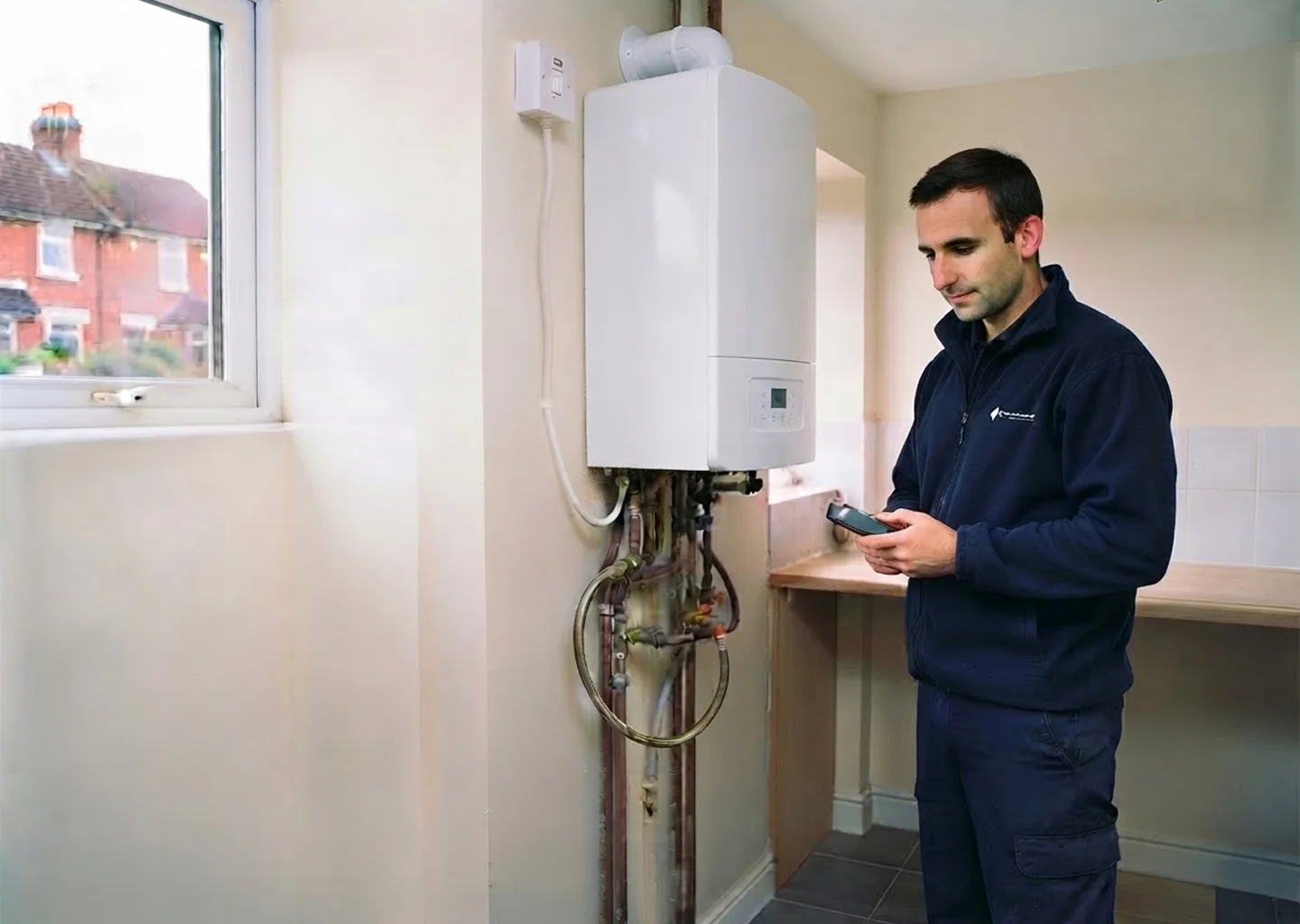
When you receive a boiler quotation, the figure at the bottom is usually the first thing you notice. However, a quotation can contain much more useful information than the final price alone. The proposed boiler, controls, installation work and estimated running costs can all affect whether the quote makes sense for your home.
Estimated running costs can be useful when comparing options, but they should not automatically determine which quotation you accept. They are based on assumptions about your property, heating habits, energy prices and boiler operation. Understanding those assumptions can help you make a more informed decision without treating an estimate as a guarantee.
What should you look for in a boiler installation quote?
A good quotation should make it reasonably clear what you are actually paying for. Two installers may provide very different prices because their proposed systems or installation scopes are not identical.
When reviewing a boiler installation quote ashford, check whether it includes:
- The boiler make and exact model
- Boiler output and efficiency information
- New controls or thermostatic controls
- Flue and flue accessories
- System cleaning or preparation where required
- Removal and disposal of the existing boiler
- New pipework where necessary
- Installation and commissioning
- Guarantees or warranties
- Any required building work or additional materials
- VAT and other applicable charges
A cheaper quotation is not necessarily comparing the same installation as a more expensive one. Likewise, a higher price does not automatically mean the proposed system will cost less to operate.
This is why looking at the complete specification alongside the price can be more informative than comparing two headline figures.
If you are considering a new boiler, The Ashford Boiler Company can discuss your existing heating system and the installation requirements before preparing a quotation.
Should estimated running costs affect your decision?
Yes, but they are best treated as one part of the decision rather than the deciding factor.
An estimated running cost can help you understand how a proposed boiler might perform under a particular set of assumptions. It may give you a useful point of comparison between two systems, particularly when their specifications are similar.
However, your actual gas consumption can be affected by many factors, including:
- The size and construction of your home
- Insulation levels
- Outdoor temperatures
- Thermostat settings
- Heating schedules
- Hot water demand
- Number of occupants
- Radiator sizing
- Boiler flow temperature
- Heating controls
- How often the system is serviced
This means a projected annual saving should not be interpreted as a guaranteed amount of money you will save after installation.
For a boiler installation quote ashford, ask the installer what assumptions have been used to produce any running-cost estimate. That makes it easier to understand what the figure actually represents.
How are estimated running costs calculated?
There is no single figure that applies to every household. A running-cost estimate normally depends on assumptions about energy consumption, boiler efficiency, heating demand and energy prices.
For example, an installer may use information about the property’s existing heating system alongside standard assumptions about annual heat demand. The estimated efficiency of the proposed boiler can then be considered against the existing system.
The result can provide a useful illustration, but it is not a prediction of your future gas bill.
Energy prices can also change. If a calculation uses a particular gas price, the estimated annual cost could become less representative when tariffs or unit rates change.
When reviewing boiler prices and installation, therefore, it is worth asking whether the running-cost figure is based on your actual historical consumption or a standard household assumption.
A smart meter or recent gas bills may provide additional information. Even then, historical usage should be treated as context rather than a guarantee of future consumption.
What questions should you ask about the running-cost estimate?
If a quotation includes projected annual energy costs or savings, ask the installer to explain how those figures were reached.
Useful questions include:
- What annual gas consumption has been assumed?
- Is the calculation based on my home’s historical usage?
- What gas price has been used?
- What boiler efficiency figure has been used?
- Have heating controls been included in the calculation?
- Does the estimate account for hot water demand?
- Is the figure a guaranteed saving or simply an estimate?
The answers can help you distinguish between a detailed calculation and a generic marketing figure.
You can also compare the assumptions used by different installers. If one quotation claims substantially lower future running costs, but the two calculations use different assumptions, the headline figures may not be directly comparable.
Does boiler efficiency tell you what your future bills will be?
Not by itself.
Boiler efficiency is important because a more efficient boiler can convert more of the fuel it uses into useful heat under suitable operating conditions. However, efficiency does not determine the total amount of heat your home requires.
Imagine two similar homes with the same boiler. One household keeps the heating on for longer, uses a higher thermostat setting and requires more hot water. Its annual gas consumption may be considerably higher despite having the same boiler.
This is why technical efficiency figures and actual household energy use should be considered separately.
Controls can also affect how efficiently the system operates. Weather compensation, load compensation, programmable controls and appropriate flow temperatures may influence how the boiler responds to the home’s heating demand.
**
How should you compare two boiler quotations?
The easiest way to avoid misleading comparisons is to put the important details side by side.
| Quotation factor | Quote A | Quote B |
|---|---|---|
| Boiler model | Check exact model | Check exact model |
| Boiler output | Compare suitability | Compare suitability |
| Controls | Record what’s included | Record what’s included |
| Installation work | Check scope | Check scope |
| Removal of old boiler | Included? | Included? |
| Warranty | Check terms | Check terms |
| Estimated running cost | Note assumptions | Note assumptions |
| Total price | Confirm final figure | Confirm final figure |
This approach changes the question from "Which quote is cheaper?" to "What exactly am I receiving for the quoted price?"
That distinction is particularly important when comparing boiler prices and installation because a quotation that appears more expensive may include additional work or better-suited controls that another quotation excludes.
A written quotation should also make it easier to identify potential extras before the installation begins.
If you have received more than one quotation and are unsure what the differences mean, The Ashford Boiler Company can help explain the practical considerations involved in planning a boiler replacement.
Could a lower upfront price still result in higher running costs?
It could, but there is no simple rule that the cheapest quotation will have the highest future running costs.
For example, one quotation might include basic controls while another includes more advanced controls. One might require additional pipework or system preparation that has not been included in the other. The boilers themselves may also differ in specification.
At the same time, you should not assume that paying more automatically guarantees lower energy bills.
The most useful approach is to consider the whole installation:
- Is the boiler correctly sized?
- Are the controls suitable for the heating system?
- Is the installation scope clearly defined?
- Is the boiler being operated at suitable temperatures?
- Are warranty conditions clear?
- Is the estimated running cost based on reasonable assumptions?
- Are there likely to be additional costs later?
This gives you a more balanced basis for comparing quotations.
What role should your existing gas-use history play?
Your previous gas consumption can provide useful context when assessing a quotation.
Recent bills or smart meter records can help establish how much gas the property has historically used. However, the figure should be interpreted alongside the circumstances in which that gas was consumed.
For example, a particularly cold winter may have resulted in higher consumption. A change in household occupancy could also alter demand. Similarly, if you have recently improved insulation or changed your heating routine, older usage figures may no longer represent your current situation.
Historical gas use is therefore best used as a reference point when discussing the proposed installation.
**
What should you prioritise if running-cost estimates differ?
If two quotations have different projected running costs, look at the assumptions before comparing the numbers.
A sensible comparison considers:
1. The proposed boiler Check the exact model rather than comparing only the manufacturer’s name.
2. The installation specification Make sure both quotations cover broadly comparable work.
3. The controls Consider what is included and how the controls will be used in your home.
4. The calculation method Ask how the estimated running cost or saving was produced.
5. The total installation price Consider the complete cost rather than a headline figure.
6. Long-term practical considerations Look at warranty terms, servicing requirements and the suitability of the proposed system.
This approach can prevent a single attractive number from dominating your decision.
Why is professional installation still important after choosing the boiler?
The boiler itself is only one part of a heating installation. Correct sizing, pipework, controls, commissioning and system setup can all affect how the system performs.
A professionally installed boiler should be commissioned correctly and the homeowner should understand how to operate the controls. This is particularly relevant when considering future gas use because the way a heating system is configured and operated can affect its performance.
An installer should also be able to explain what has been included in the quotation and identify any limitations or assumptions behind estimated savings.
For homeowners comparing a boiler installation quote ashford, clarity can therefore be just as useful as the headline price.
What is the most sensible way to assess a boiler quote?
Estimated running costs can provide helpful information, but they should sit alongside the rest of the quotation rather than replacing it.
Look at the boiler specification, installation scope, controls, warranty, total price and assumptions behind any projected energy figures. If the quotation includes an estimated saving, ask what information was used to calculate it and remember that actual household gas use can change over time.
A quotation that is clear about what is included and how estimates have been produced gives you a better basis for comparing your options.
Conclusion: Look at the whole quotation, not one number
When comparing a boiler installation quote ashford, estimated running costs can be useful, particularly when you understand the assumptions behind them. They can help illustrate the potential difference between systems, but they cannot guarantee what your future gas bills will be.
The most reliable comparison is broader. Consider the proposed boiler, controls, installation work, warranty, total price and expected system performance together.
The Ashford Boiler Company can provide practical guidance on boiler installation requirements and help homeowners understand what is included in their quotation. Taking time to review the details before work begins can make the replacement process clearer and help you choose an installation that is properly suited to your home.
If you are planning a boiler replacement in Ashford, contact The Ashford Boiler Company to discuss your requirements and request a clear, tailored quotation.
Related articles




Which fuel powers your boiler?
At a glance
When you receive a boiler quotation, the figure at the bottom is usually the first thing you notice. However, a quotation can contain much more useful information than the final price alone. The proposed boiler, controls, installation work and estimated running costs can all affect whether the quote makes sense for your home.
Estimated running costs can be useful when comparing options, but they should not automatically determine which quotation you accept. They are based on assumptions about your property, heating habits, energy prices and boiler operation. Understanding those assumptions can help you make a more informed decision without treating an estimate as a guarantee.
What should you look for in a boiler installation quote?
A good quotation should make it reasonably clear what you are actually paying for. Two installers may provide very different prices because their proposed systems or installation scopes are not identical.
When reviewing a boiler installation quote ashford, check whether it includes:
- The boiler make and exact model
- Boiler output and efficiency information
- New controls or thermostatic controls
- Flue and flue accessories
- System cleaning or preparation where required
- Removal and disposal of the existing boiler
- New pipework where necessary
- Installation and commissioning
- Guarantees or warranties
- Any required building work or additional materials
- VAT and other applicable charges
A cheaper quotation is not necessarily comparing the same installation as a more expensive one. Likewise, a higher price does not automatically mean the proposed system will cost less to operate.
This is why looking at the complete specification alongside the price can be more informative than comparing two headline figures.
If you are considering a new boiler, The Ashford Boiler Company can discuss your existing heating system and the installation requirements before preparing a quotation.
Should estimated running costs affect your decision?
Yes, but they are best treated as one part of the decision rather than the deciding factor.
An estimated running cost can help you understand how a proposed boiler might perform under a particular set of assumptions. It may give you a useful point of comparison between two systems, particularly when their specifications are similar.
However, your actual gas consumption can be affected by many factors, including:
- The size and construction of your home
- Insulation levels
- Outdoor temperatures
- Thermostat settings
- Heating schedules
- Hot water demand
- Number of occupants
- Radiator sizing
- Boiler flow temperature
- Heating controls
- How often the system is serviced
This means a projected annual saving should not be interpreted as a guaranteed amount of money you will save after installation.
For a boiler installation quote ashford, ask the installer what assumptions have been used to produce any running-cost estimate. That makes it easier to understand what the figure actually represents.
How are estimated running costs calculated?
There is no single figure that applies to every household. A running-cost estimate normally depends on assumptions about energy consumption, boiler efficiency, heating demand and energy prices.
For example, an installer may use information about the property’s existing heating system alongside standard assumptions about annual heat demand. The estimated efficiency of the proposed boiler can then be considered against the existing system.
The result can provide a useful illustration, but it is not a prediction of your future gas bill.
Energy prices can also change. If a calculation uses a particular gas price, the estimated annual cost could become less representative when tariffs or unit rates change.
When reviewing boiler prices and installation, therefore, it is worth asking whether the running-cost figure is based on your actual historical consumption or a standard household assumption.
A smart meter or recent gas bills may provide additional information. Even then, historical usage should be treated as context rather than a guarantee of future consumption.
What questions should you ask about the running-cost estimate?
If a quotation includes projected annual energy costs or savings, ask the installer to explain how those figures were reached.
Useful questions include:
- What annual gas consumption has been assumed?
- Is the calculation based on my home’s historical usage?
- What gas price has been used?
- What boiler efficiency figure has been used?
- Have heating controls been included in the calculation?
- Does the estimate account for hot water demand?
- Is the figure a guaranteed saving or simply an estimate?
The answers can help you distinguish between a detailed calculation and a generic marketing figure.
You can also compare the assumptions used by different installers. If one quotation claims substantially lower future running costs, but the two calculations use different assumptions, the headline figures may not be directly comparable.
Does boiler efficiency tell you what your future bills will be?
Not by itself.
Boiler efficiency is important because a more efficient boiler can convert more of the fuel it uses into useful heat under suitable operating conditions. However, efficiency does not determine the total amount of heat your home requires.
Imagine two similar homes with the same boiler. One household keeps the heating on for longer, uses a higher thermostat setting and requires more hot water. Its annual gas consumption may be considerably higher despite having the same boiler.
This is why technical efficiency figures and actual household energy use should be considered separately.
Controls can also affect how efficiently the system operates. Weather compensation, load compensation, programmable controls and appropriate flow temperatures may influence how the boiler responds to the home’s heating demand.
**
How should you compare two boiler quotations?
The easiest way to avoid misleading comparisons is to put the important details side by side.
| Quotation factor | Quote A | Quote B |
|---|---|---|
| Boiler model | Check exact model | Check exact model |
| Boiler output | Compare suitability | Compare suitability |
| Controls | Record what’s included | Record what’s included |
| Installation work | Check scope | Check scope |
| Removal of old boiler | Included? | Included? |
| Warranty | Check terms | Check terms |
| Estimated running cost | Note assumptions | Note assumptions |
| Total price | Confirm final figure | Confirm final figure |
This approach changes the question from "Which quote is cheaper?" to "What exactly am I receiving for the quoted price?"
That distinction is particularly important when comparing boiler prices and installation because a quotation that appears more expensive may include additional work or better-suited controls that another quotation excludes.
A written quotation should also make it easier to identify potential extras before the installation begins.
If you have received more than one quotation and are unsure what the differences mean, The Ashford Boiler Company can help explain the practical considerations involved in planning a boiler replacement.
Could a lower upfront price still result in higher running costs?
It could, but there is no simple rule that the cheapest quotation will have the highest future running costs.
For example, one quotation might include basic controls while another includes more advanced controls. One might require additional pipework or system preparation that has not been included in the other. The boilers themselves may also differ in specification.
At the same time, you should not assume that paying more automatically guarantees lower energy bills.
The most useful approach is to consider the whole installation:
- Is the boiler correctly sized?
- Are the controls suitable for the heating system?
- Is the installation scope clearly defined?
- Is the boiler being operated at suitable temperatures?
- Are warranty conditions clear?
- Is the estimated running cost based on reasonable assumptions?
- Are there likely to be additional costs later?
This gives you a more balanced basis for comparing quotations.
What role should your existing gas-use history play?
Your previous gas consumption can provide useful context when assessing a quotation.
Recent bills or smart meter records can help establish how much gas the property has historically used. However, the figure should be interpreted alongside the circumstances in which that gas was consumed.
For example, a particularly cold winter may have resulted in higher consumption. A change in household occupancy could also alter demand. Similarly, if you have recently improved insulation or changed your heating routine, older usage figures may no longer represent your current situation.
Historical gas use is therefore best used as a reference point when discussing the proposed installation.
**
What should you prioritise if running-cost estimates differ?
If two quotations have different projected running costs, look at the assumptions before comparing the numbers.
A sensible comparison considers:
1. The proposed boiler Check the exact model rather than comparing only the manufacturer’s name.
2. The installation specification Make sure both quotations cover broadly comparable work.
3. The controls Consider what is included and how the controls will be used in your home.
4. The calculation method Ask how the estimated running cost or saving was produced.
5. The total installation price Consider the complete cost rather than a headline figure.
6. Long-term practical considerations Look at warranty terms, servicing requirements and the suitability of the proposed system.
This approach can prevent a single attractive number from dominating your decision.
Why is professional installation still important after choosing the boiler?
The boiler itself is only one part of a heating installation. Correct sizing, pipework, controls, commissioning and system setup can all affect how the system performs.
A professionally installed boiler should be commissioned correctly and the homeowner should understand how to operate the controls. This is particularly relevant when considering future gas use because the way a heating system is configured and operated can affect its performance.
An installer should also be able to explain what has been included in the quotation and identify any limitations or assumptions behind estimated savings.
For homeowners comparing a boiler installation quote ashford, clarity can therefore be just as useful as the headline price.
What is the most sensible way to assess a boiler quote?
Estimated running costs can provide helpful information, but they should sit alongside the rest of the quotation rather than replacing it.
Look at the boiler specification, installation scope, controls, warranty, total price and assumptions behind any projected energy figures. If the quotation includes an estimated saving, ask what information was used to calculate it and remember that actual household gas use can change over time.
A quotation that is clear about what is included and how estimates have been produced gives you a better basis for comparing your options.
Conclusion: Look at the whole quotation, not one number
When comparing a boiler installation quote ashford, estimated running costs can be useful, particularly when you understand the assumptions behind them. They can help illustrate the potential difference between systems, but they cannot guarantee what your future gas bills will be.
The most reliable comparison is broader. Consider the proposed boiler, controls, installation work, warranty, total price and expected system performance together.
The Ashford Boiler Company can provide practical guidance on boiler installation requirements and help homeowners understand what is included in their quotation. Taking time to review the details before work begins can make the replacement process clearer and help you choose an installation that is properly suited to your home.
If you are planning a boiler replacement in Ashford, contact The Ashford Boiler Company to discuss your requirements and request a clear, tailored quotation.